
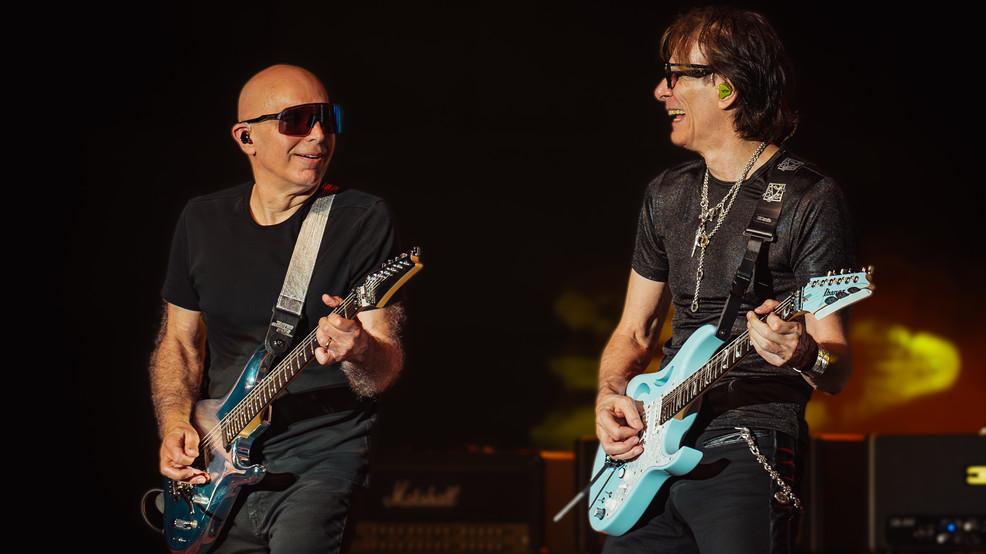
Joe Satriani and Steve Vai: The Greatest Guitar Friendship in Rock History
By Joe | LearnGuitarWithJoe.com
There have been countless rivalries in guitar history.
Eddie Van Halen versus Randy Rhoads. Clapton versus Beck. Hendrix versus everyone who came after him.
But one of the most fascinating stories in modern guitar history isn’t a rivalry at all.
It’s a friendship.
The story of Joe Satriani and Steve Vai is unique because it begins not with two guitar heroes competing for the spotlight, but with a guitar teacher and his student.
Long before they were filling arenas, releasing platinum records, headlining the legendary G3 tours, and inspiring generations of guitar players, Steve Vai was a teenager looking for lessons. Joe Satriani was the local guitar teacher with a reputation for understanding the instrument at a deeper level than almost anyone else.
Neither of them knew it at the time, but that relationship would eventually help shape the future of instrumental rock guitar.
Today, Satriani and Vai are considered two of the most influential guitarists ever to pick up the instrument. Their styles are completely different, yet somehow deeply connected. Their careers followed separate paths, but they continually crossed back into each other’s lives. Their friendship survived fame, changing musical trends, and decades of success.
Most importantly, they both proved that the guitar can be far more than a rhythm instrument or a vehicle for blues licks. In the hands of Satriani and Vai, the guitar became a voice capable of expressing everything from joy and humor to mystery and heartbreak.
Where It All Began
Joe Satriani was born in Westbury, New York, in 1956. Like many guitar players of his generation, he was deeply inspired by Jimi Hendrix. In fact, the story goes that Satriani learned of Hendrix’s death while playing football and immediately decided to devote himself to the guitar.
That decision would change his life.
By the mid-1970s, Satriani had developed a reputation as both a gifted player and an exceptional teacher. One of the young students who came to him for lessons was a teenager named Steve Vai.
Vai was already obsessed with music and practicing guitar. He wasn’t looking for shortcuts. He wanted to understand everything.
Satriani became more than a teacher. He became a mentor.
Years later, Vai would often speak about the enormous impact Satriani had on his development, particularly his understanding of music theory, ear training, discipline, and the importance of developing a personal voice on the instrument.
While many teachers simply show students what to play, Satriani taught Vai how to think.
That difference matters.
Two Players, Two Philosophies
Although Steve Vai learned from Joe Satriani, their playing styles evolved into very different artistic identities.
Satriani’s playing is often described as melodic, emotional, and song-oriented. Even when he’s performing incredibly technical passages, there is usually a clear melody guiding the listener through the music.
Listen to songs like “Always With Me, Always With You,” “Flying in a Blue Dream,” or “Summer Song.” You’ll hear a guitarist who prioritizes memorable musical ideas above all else.
Steve Vai approaches the instrument differently.
Vai often treats the guitar as a living, breathing character. His music is theatrical, dramatic, and unpredictable. Songs like “For the Love of God,” “The Audience Is Listening,” and “Building the Church” feel almost cinematic.
Where Satriani writes songs that happen to feature incredible guitar playing, Vai often creates entire worlds built around the guitar itself.
Neither approach is better.
They’re simply different.
And understanding that difference is one of the most important lessons aspiring guitarists can learn.
Joe Satriani’s Signature Techniques
One of the reasons Satriani became such an influential player is that he mastered advanced techniques without making them sound like exercises.
Legato
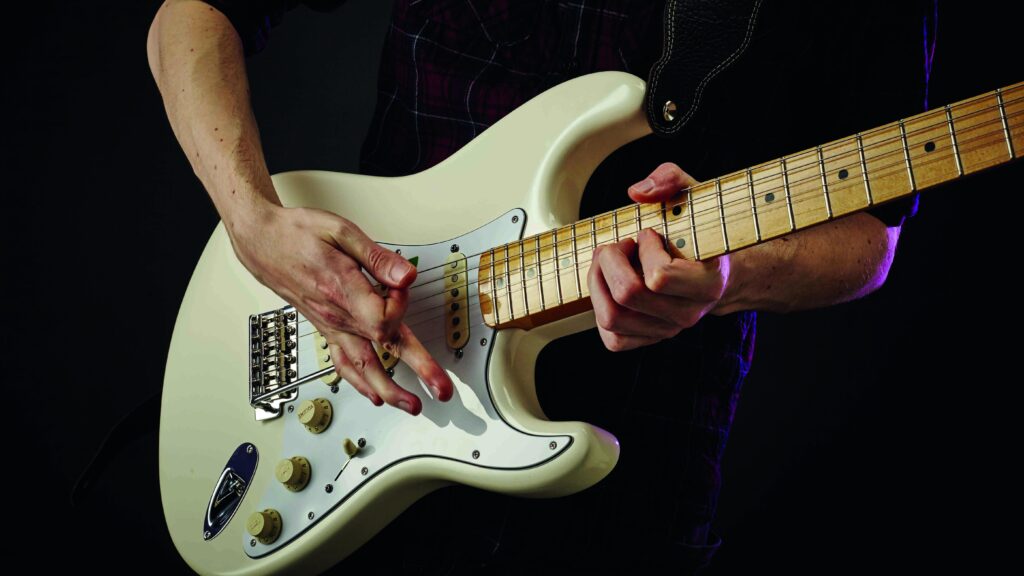
Satriani’s legato playing remains legendary. Instead of relying heavily on alternate picking, he often uses hammer-ons and pull-offs to create smooth, flowing lines that almost sound like a singer.
To begin developing Satriani-style legato, practice simple three-note-per-string scale patterns while minimizing your picking hand movement. Focus on keeping every note equal in volume and clarity.
Melodic Phrasing
Many players spend years practicing scales but never learn how to create memorable melodies.
Satriani is the opposite.
Study songs like “Always With Me, Always With You” and pay attention to how simple many of the melodic phrases actually are. The magic isn’t in the complexity. It’s in the phrasing, timing, and emotional delivery.
Whammy Bar Expression
Satriani uses the tremolo bar almost like a singer uses vibrato.
Instead of dramatic dive bombs, he frequently applies subtle pitch variations that make notes feel alive.
Experiment by holding a sustained note and applying small, controlled movements with the tremolo arm. Think of it as adding emotion rather than performing a trick.
Steve Vai’s Signature Techniques
If Satriani represents melody and restraint, Steve Vai represents limitless creativity.
Advanced Whammy Bar Control
Vai’s use of the tremolo system borders on supernatural.
He bends notes with the bar, combines bar movement with fretted bends, and creates sounds that often seem impossible.
Start by learning simple dive bombs and pitch raises before attempting Vai’s more advanced techniques.
Two-Handed Tapping
Although many players associate tapping with Eddie Van Halen, Vai expanded the technique into entirely new territory.
Instead of using tapping simply for speed, he uses it to create melodies, harmonies, and unusual intervallic patterns.
Intervallic Playing
Vai frequently builds phrases around wide intervals rather than traditional scalar movement.
Try creating riffs that skip notes instead of moving step-by-step through scales. The results will immediately sound more modern and dramatic.
What They Have in Common
Despite their stylistic differences, Satriani and Vai share several important qualities.
First, they both possess exceptional technique.
Second, they both understand music theory at a very high level.
Third, and perhaps most importantly, they both prioritize individuality.
Neither player sounds like a clone of anyone else.
That may be the greatest lesson they have to offer.
The goal of learning guitar isn’t becoming Joe Satriani or Steve Vai.
The goal is becoming the best version of yourself.