
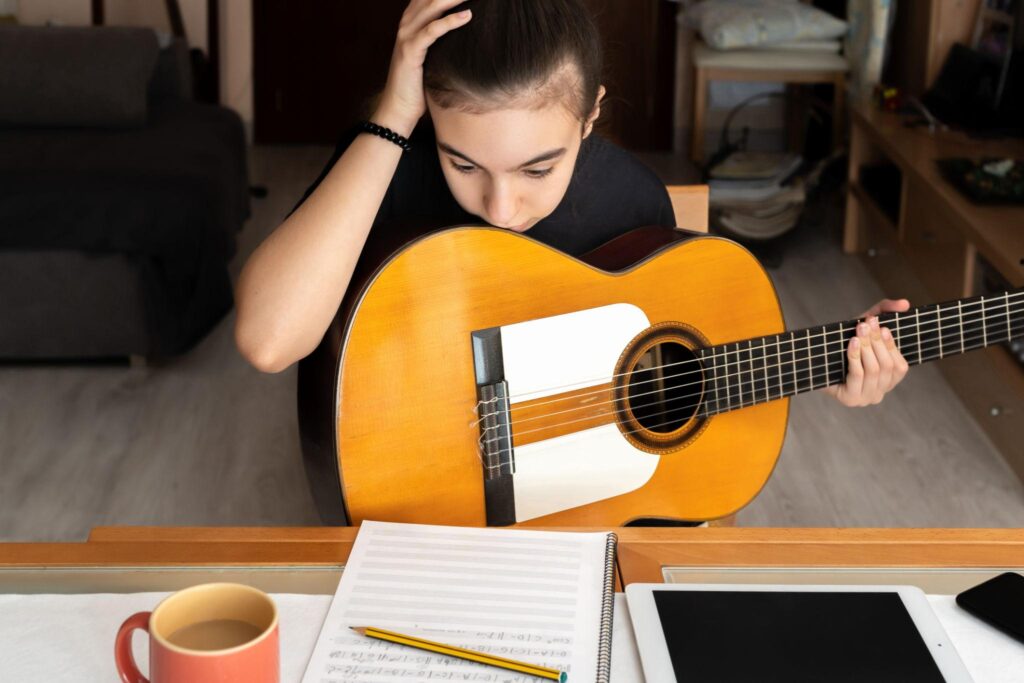
Why 90% of People Who Buy a Guitar Quit (And How You Won’t)
By Joe | LearnGuitarWithJoe.com
Every year, millions of people buy a guitar. Some are kids inspired by their favorite rock star. Others are adults finally chasing a dream they’ve carried since high school. Some receive a guitar as a birthday gift and imagine themselves playing songs around a campfire, on stage, or simply for their own enjoyment.
Most of them start with the exact same thought:
“This time, I’m going to learn.”
Unfortunately, for many people, that dream slowly fades away. The guitar ends up in a corner, tucked away in a closet, or forgotten under a bed. Dust collects on the strings, and another aspiring musician quietly gives up.
The uncomfortable truth is that most people who buy a guitar never become guitar players. Not because they lack talent. Not because they’re too old. Not because their fingers are too small, too big, or too weak. They quit because nobody ever tells them what learning guitar is actually like. Today, I’m going to tell you.

The Biggest Lie in Guitar Education
The internet has made learning guitar look easier than ever. Every day, new videos promise incredible results with titles like “Learn Guitar in 7 Days,” “Play Like Hendrix in 30 Minutes,” or “Master Every Chord Instantly.”
The reality is very different.
Nobody becomes a great guitar player in a week. Not Jimi Hendrix. Not Eddie Van Halen. Not Slash. Not John Mayer. Not even that naturally gifted player you know who seems to pick everything up effortlessly.
Every guitarist you admire went through the same frustrating stage. Their chords buzzed. Their timing was off. Their fingers didn’t cooperate. For a long time, they sounded terrible. The difference wasn’t talent. The difference was that they kept going when most people quit.
Your Fingers Are Supposed to Hurt
One of the biggest surprises for beginners is how physically uncomfortable the guitar feels at first. Your fingertips hurt. Your hand cramps. Your chords buzz more than they ring out clearly. Sometimes your strumming sounds less like music and more like a cardboard box tumbling down a flight of stairs.
If that sounds familiar, congratulations—you’re completely normal.
Many beginners assume these struggles mean they’re doing something wrong. In reality, the opposite is true. Your fingers are developing calluses. Your muscles are learning unfamiliar movements. Your brain is creating entirely new neural pathways. The discomfort isn’t evidence that you’re failing. It’s evidence that you’re learning.
The Moment Most People Quit
For many beginners, the most dangerous period happens somewhere between Day 10 and Day 30. The excitement of buying a new guitar starts to wear off. The instrument is no longer shiny and new. The first few chords still don’t sound great, and songs don’t yet sound like actual music.
This is usually when the negative thoughts begin.
“Maybe I just don’t have talent.”
That’s the moment that separates future guitar players from former guitar players.
Almost everyone reaches this stage. The people who continue through it eventually become musicians. The people who stop convince themselves they weren’t meant to play in the first place.
Talent Is Massively Overrated
After teaching students of all ages—from children and teenagers to working professionals and retirees—I’ve noticed something important. The biggest predictor of success isn’t talent. It’s consistency.
A student who practices for fifteen minutes every day will almost always outperform someone who practices for three hours once every two weeks. Guitar rewards repetition, not intensity.
Think about brushing your teeth. You wouldn’t brush for three hours on Saturday and then ignore them for the rest of the week. You do a little every day because consistency creates results. Learning guitar works exactly the same way.

The Real Secret Nobody Talks About
Most people assume successful guitar players are constantly motivated. They imagine professionals waking up every morning excited to practice for hours.
The truth is much less glamorous.
Professional musicians have days when they don’t feel like practicing. Successful students have days when they don’t feel like picking up the guitar. The difference is that they play anyway.
Motivation comes and goes. Habits stay.
The players who succeed aren’t waiting for inspiration to strike. They’ve built a routine that keeps them moving forward even when motivation disappears.
Stop Trying to Be Great
This advice might sound backwards, but it’s one of the most important lessons I’ve learned as both a guitarist and a teacher.
Most beginners fail because they’re trying to become amazing too quickly. They compare themselves to players who have been practicing for twenty years. They expect perfection immediately and become frustrated when it doesn’t happen.
Instead of focusing on becoming great overnight, focus on becoming slightly better every day. Improve one chord change. Learn one new riff. Fix one timing issue.
Small improvements compound over time. A year from now, you’ll be amazed by what those tiny daily victories have added up to.
The Guitar Changed My Life
I still remember the milestones that made me fall in love with guitar. The first time I played a song from beginning to end. The first time someone sang along while I played. The first time I stepped onto a stage. The first time music connected me with complete strangers.
A guitar is more than wood, metal, and strings. It’s confidence. It’s creativity. It’s self-expression. It’s friendships, memories, and experiences you’ll carry with you for the rest of your life.
The people who stick with guitar long enough eventually discover something remarkable. The goal was never just learning chords. The goal was becoming the kind of person who refuses to quit.
If You’re Thinking About Giving Up
Don’t. Not yet.
Give yourself six months. Not six days. Not six weeks. Six months.
Play a little every day. Learn songs you genuinely love. Celebrate small victories. Accept mistakes as part of the process. Most importantly, keep showing up.
One day you’ll pick up your guitar and realize something extraordinary has happened. Without even noticing it, you’ve become a guitar player.

Ready to Learn the Right Way?
The fastest progress doesn’t come from practicing more. It comes from practicing smarter. Whether you’re a complete beginner, returning after years away, or finally ready to break through a plateau, I can help you avoid the mistakes that cause most players to quit.
At LearnGuitarWithJoe.com, I offer personalized online guitar lessons for kids and adults covering rock, blues, metal, acoustic guitar, music fundamentals, and real-world playing skills. My goal isn’t just to teach you songs—it’s to help you become the guitarist you’ve always wanted to be.
Book your lesson today and start making real progress. Because sometimes the difference between someone who quits and someone who succeeds is simply one more lesson.