
🎸 The Circle of Fifths Explained (For Guitarists)

If you’ve ever looked at the Circle of Fifths and thought, “That looks important… but confusing,” you’re not alone.
Here’s the truth:
👉 The Circle of Fifths is one of the most powerful tools in music
👉 And once you understand it, your guitar playing will level up fast
Let’s break it down in a way that actually makes sense.
🔵 What Is the Circle of Fifths?
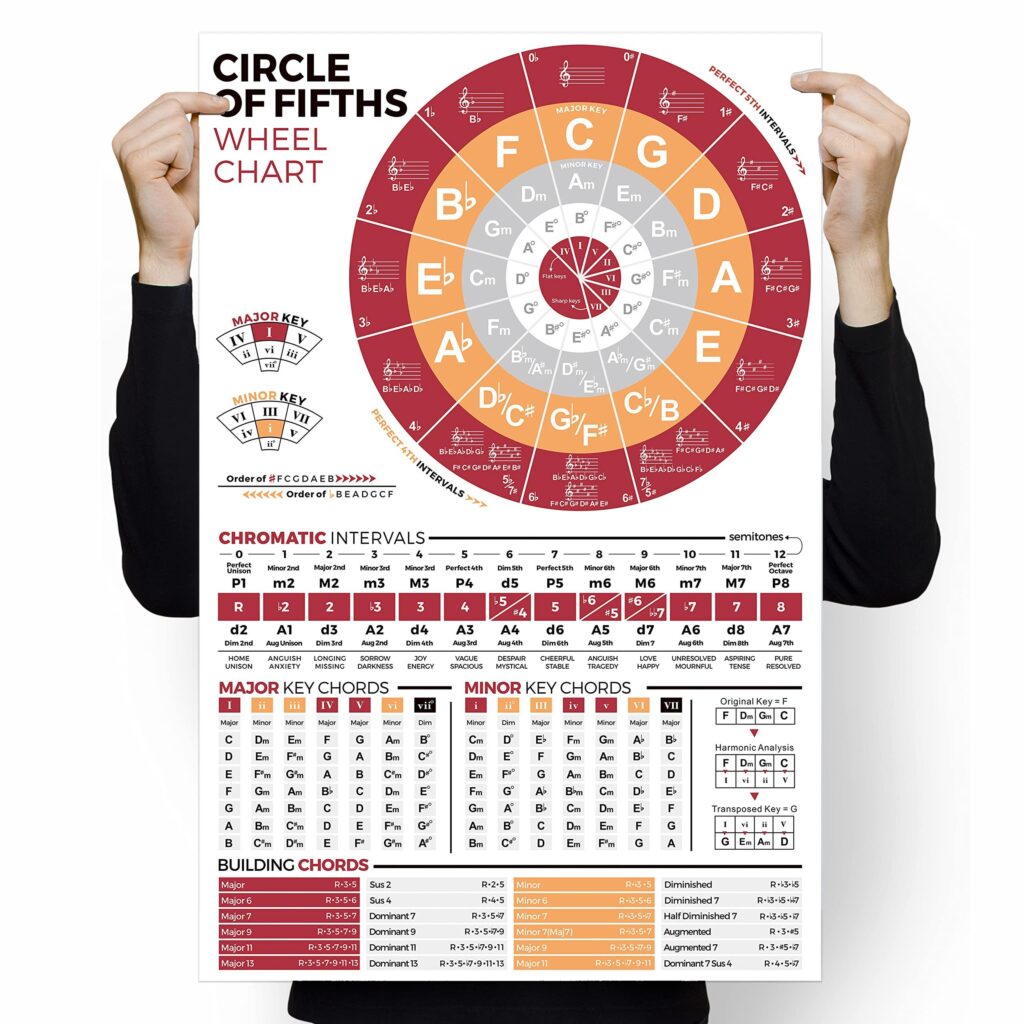
The Circle of Fifths is a visual map that shows how all 12 keys in music are connected.
Each step around the circle moves by an interval called a perfect fifth (which is 7 semitones).
For example:
- Start on C
- Move up a fifth → G
- Another fifth → D
- Then → A → E → B → F# → C#
Going the other direction? You’re moving in fourths.
🎯 Why Guitarists Should Care


This isn’t just theory—it’s practical.
1. Chord Progressions Make Sense
Most songs follow patterns based on the circle.
Example:
- C → G → D → A
That’s literally moving around the circle.
Blues, rock, jazz—all of it uses this movement.
2. Easier Key Changes
Need to transpose a song?
The circle shows you:
- Which keys are closely related
- Which ones will sound natural
No more guessing.
3. Understanding Scales & Harmony
Each key connects to:
- Its relative minor
- Its diatonic chords
Example:
- C major ↔ A minor
That relationship is built right into the circle.
🎵 The Secret: It’s All About Relationships


The Circle of Fifths isn’t about memorizing—it’s about seeing patterns.
Here’s what it reveals:
- Keys next to each other = sound good together
- Keys far apart = more tension
- Everything is connected
Once you see that, your playing becomes more intentional.
🔥 How to Practice It on Guitar
Keep this simple and practical:
👉 Exercise 1: Follow the Circle with Power Chords
Play:
- C → G → D → A → E → B
Use power chords and move around the neck.
👉 Exercise 2: Build Triads in One Key
Pick a key (like C) and play:
- C – Dm – Em – F – G – Am – Bdim
Now notice how those chords relate on the circle.
👉 Exercise 3: Jam Using Fifth Movement
Create a progression like:
- Am → Dm → G → C
That’s circle motion—and it sounds amazing.
🎸 Final Thoughts
The Circle of Fifths isn’t just “music theory.”
It’s a shortcut to understanding music.
If you take the time to learn it:
- Your chord choices improve
- Your solos sound more musical
- Your confidence skyrockets
And most importantly…
👉 You stop guessing and start knowing