

Guitar music isn’t living inside neat little boxes anymore—and that’s a good thing.
For decades, players tended to identify with a lane: rock, blues, jazz, metal, country. Those styles still exist, but today’s guitarists are pulling from all of them at once, creating something far more fluid and personal.
Instead of sticking to one sound, modern players are mixing influences in ways that would’ve been unusual years ago:
- Rock + Ambient
Big riffs layered with reverb, delay, and atmospheric textures—almost cinematic in feel. - Metal + Jazz
Complex chord voicings, odd time signatures, and improvisation woven into heavy playing. - Pop + Advanced Technique
Clean, catchy parts that quietly use sophisticated theory and precision playing. - Neo-Soul + R&B + Gospel Influence
Chord extensions, smooth phrasing, and expressive dynamics becoming mainstream.
The result: guitar parts that serve the song and showcase musical depth.
A new generation of players is driving this shift:
- Tim Henson blends shred, hip-hop rhythms, and classical-inspired phrasing
- Mateus Asato mixes gospel, R&B, and melodic lead playing
- Plini brings cinematic, ambient textures into progressive guitar
- Cory Wong fuses funk rhythm with pop precision and clean tone
These aren’t just “guitarists”—they’re musicians first, using the guitar as a tool to express a wide range of ideas.
Technology Is Fueling the Shift
This evolution isn’t happening in a vacuum.
Modern tools are making it easier than ever to explore new sounds:
- Advanced modeling amps and plugins
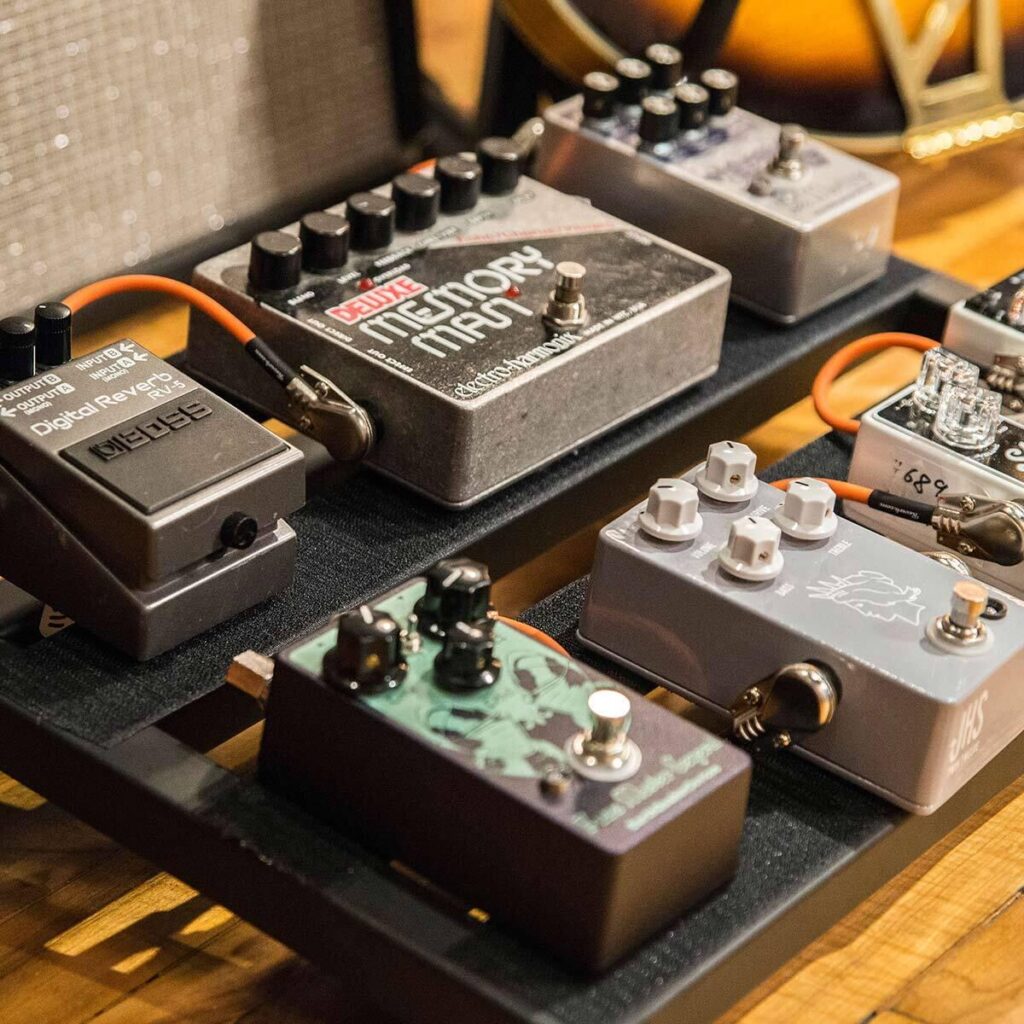
- Massive pedal options (especially ambient effects)
- DAWs that let guitarists produce full tracks at home
Players are no longer limited by:
- Studio access
- Expensive gear
- Traditional band setups
If you can imagine a sound, you can probably create it.
What This Means for Your Playing
This shift opens up huge opportunities—but also raises the bar.
If you want to grow as a guitarist today, it’s not just about playing faster or knowing more scales. It’s about adaptability.
Here’s what actually matters now:
- Rhythm skills → can you lock into different grooves (funk, pop, odd meters)?
- Chord vocabulary → beyond basic major/minor shapes
- Dynamics & feel → how you play matters as much as what you play
- Tone shaping → using effects musically, not just for flash
The Big Takeaway
The modern guitarist isn’t defined by genre—they’re defined by range.
The more styles you explore:
- The more creative you become
- The more gigs and opportunities you can handle
- The more unique your voice sounds
Because at the end of the day, the goal isn’t to sound like everyone else in a genre…
…it’s to sound like you, with influences from everywhere.