
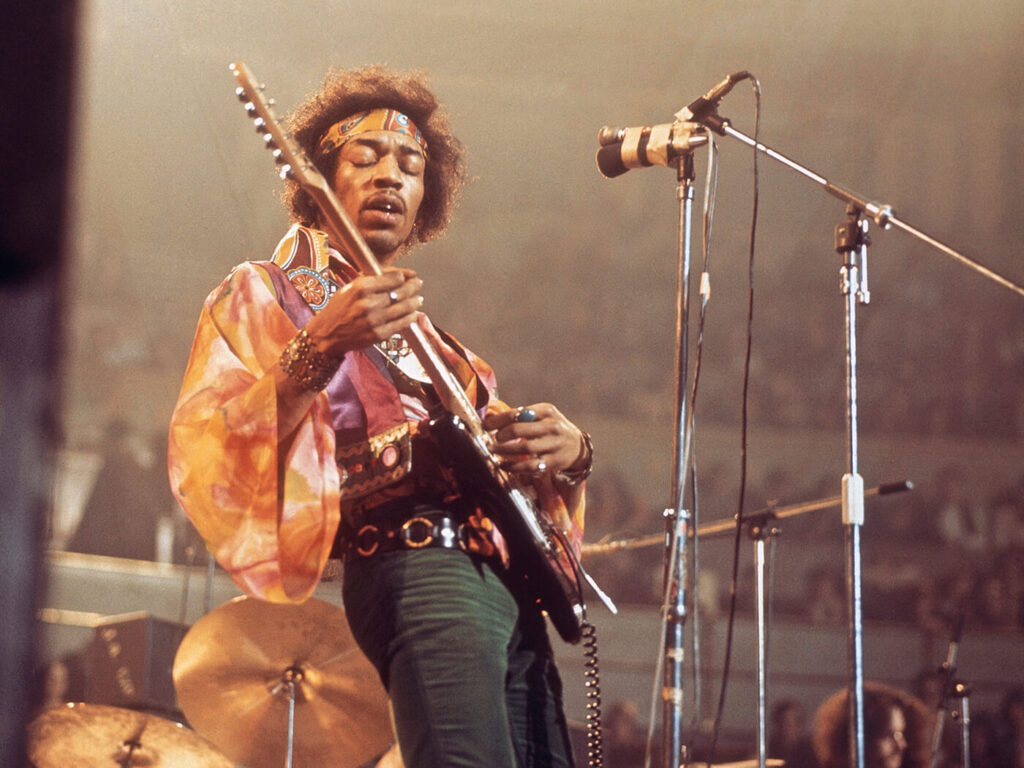
One of the smartest ways to level up your guitar playing is to study the masters — not just copying their licks, but understanding exactly what makes their sound unique.
In this deep-dive post, I break down the signature techniques of 10 legendary guitarists. For each one, you’ll get the background, the specific technique explained, and practical ways you can start applying it in your own playing (even if you’re still a beginner or intermediate player).
Let’s dive in.
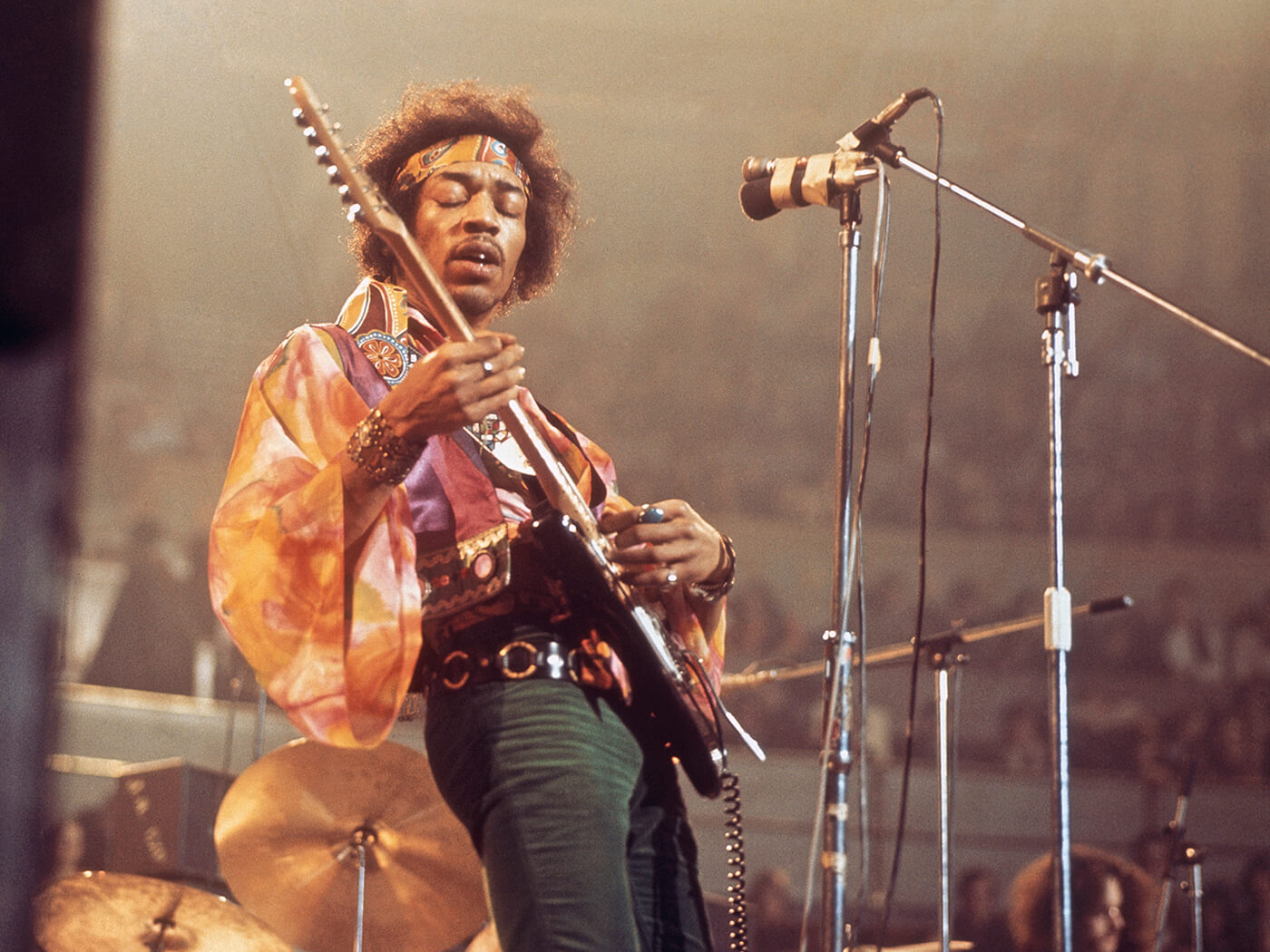
The Gear Used by Jimi Hendrix on Are You Experienced
1. Jimi Hendrix – Expressive Effects & Controlled Feedback Jimi didn’t just play the guitar — he made it speak, scream, and cry. He was a pioneer in using pedals (wah-wah, fuzz, Octavia) and turning the guitar’s natural feedback into a musical tool instead of a problem.
Signature technique: Using the guitar as an effects instrument. He would sustain notes, move the guitar toward the amp, and manipulate the feedback for howling, singing tones.
How to steal it: Plug in a distortion pedal, play a sustained note on the high E string (12th fret), and slowly move your guitar closer to the amp until you hear singing feedback. Then shape it with the wah or volume knob. Practice this for 5 minutes a day and you’ll instantly add emotion to your leads.
Official site: jimihendrix.com
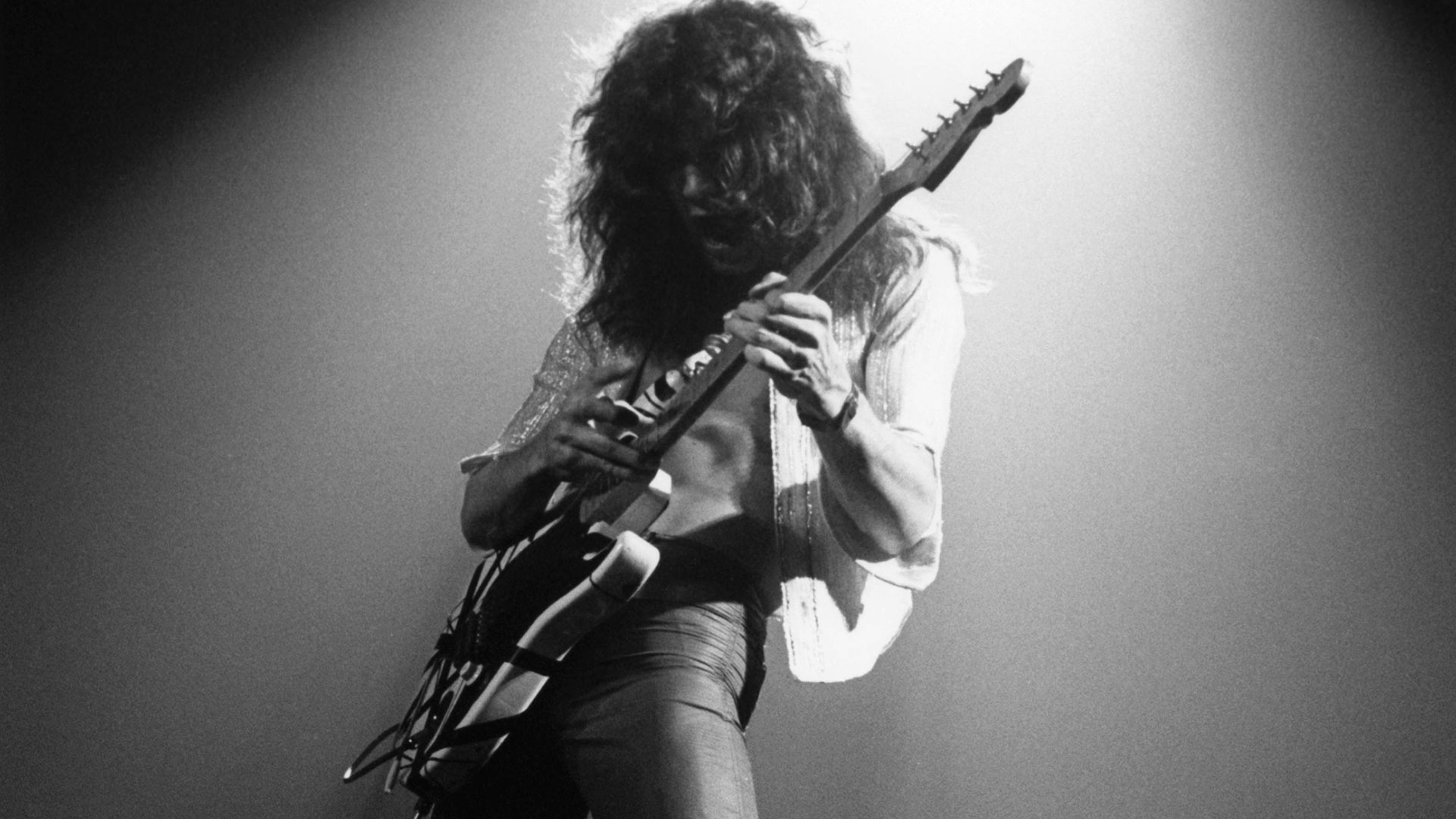
Watch Eddie Van Halen explain how he figured out the two-handed tapping technique behind Eruption – all thanks to a little help from Jimmy Page | Guitar World
2. Eric Clapton – Soulful String Bending & Vocal Phrasing Clapton’s playing is the gold standard for “less is more.” He makes every bend and vibrato feel like a human voice singing.
Signature technique: Precise, vocal-style string bends combined with dynamic phrasing. He bends notes slightly sharp or uses pre-bends so the note lands perfectly in tune.
How to steal it: Pick any minor pentatonic lick and focus only on bending the 3rd and 7th notes in tune. Record yourself and compare to Clapton solos (like “Wonderful Tonight” or “Layla”). Slow everything down and feel the emotion in each bend.
3. Eddie Van Halen – Two-Handed Tapping Eddie exploded onto the scene in 1978 with “Eruption” and changed rock guitar forever. He took a technique that was rarely used and made it mainstream.
Signature technique: Two-handed tapping — using the picking-hand index or middle finger to “tap” notes on the fretboard while the fretting hand handles pull-offs and hammer-ons.
How to steal it: Start simple: Fret the 5th fret on the G string with your left hand, then tap the 12th fret with your right-hand index finger and pull off. Repeat across strings. Once comfortable, add triplets or 16th-note patterns. This builds speed and coordination fast.
4. B.B. King – Wide Vibrato & Economical Note Choice The King of the Blues could say more with three notes than most players say in a whole solo. His vibrato is instantly recognizable.
Signature technique: Wide, controlled vibrato (shaking the string side-to-side) and using space between notes so each one has maximum impact.
How to steal it: Play the B.B. King box (minor pentatonic with added flat 5) and focus on making every note “sing” with vibrato. Practice long sustained notes first, then short phrases.

B.B. King’s Guitar Lucille Going Up For Auction
5. David Gilmour – Smooth Legato & Emotional Space Pink Floyd’s Gilmour is the master of melody and tone. His solos feel like a story unfolding.
Signature technique: Seamless legato (hammer-ons and pull-offs) combined with tasteful use of space and delay. He lets notes breathe.
How to steal it: Take any scale and practice hammer-ons/pull-offs on every other note. Add a light delay and focus on playing only what needs to be played — silence is part of the music.
6. Stevie Ray Vaughan – Aggressive Blues Bends & Shuffle Groove SRV took Texas blues to another level with raw power, thumb-over-neck grip, and fiery bends.
Signature technique: Heavy, in-tune string bends combined with a driving shuffle rhythm using hybrid picking or thumb for bass notes.
How to steal it: Practice big whole-step and minor-third bends on the B and G strings while keeping perfect intonation. Then layer in a shuffle groove underneath.
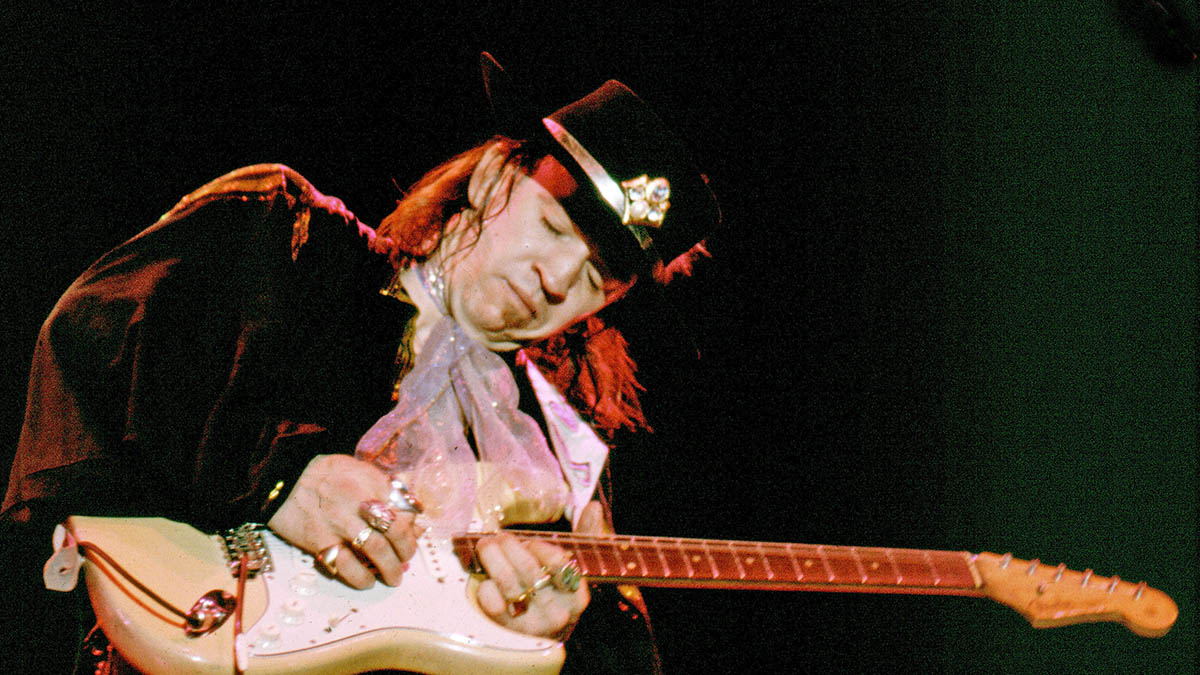
Stevie Ray Vaughan defined the sound of contemporary blues guitar – here are 20 techniques you can learn from the Stratocaster master | Guitar World
7. Brian May – Orchestral Guitar Layering & Harmonized Lines Queen’s Brian May recorded multiple guitar tracks that sound like an orchestra.
Signature technique: Building rich, harmonized guitar parts (usually in thirds or sixths) and using his homemade “Red Special” guitar with delay for huge, singing leads.
How to steal it: Record a simple melody, then record the same melody a third above it. Pan them left and right. Add subtle delay and you’ll instantly get that huge Queen sound.
8. Steve Vai – Advanced Tapping, Legato & Whammy Bar Expression Vai took technical playing to the next level while keeping it musical.
Signature technique: Complex tapping sequences across multiple strings, ultra-clean legato runs, and dramatic whammy-bar dives and vibrato.
How to steal it: Learn a basic 3-note tapping pattern on one string, then move it across the fretboard. Add whammy-bar scoops at the end of phrases for expression.

Steve Vai: The easy path to becoming a guitar virtuoso | GuitarPlayer
9. John Petrucci – Precision Alternate Picking & Sweep Arpeggios Dream Theater’s guitarist is famous for flawless technique at high speeds.
Signature technique: Clean alternate picking on complex lines and sweeping arpeggios that sound effortless.
How to steal it: Use a metronome and start at 60 BPM with simple 3-string arpeggios. Focus on economy of motion and even tone. Speed comes later.
10. Mark Knopfler – Expressive Fingerstyle & Hybrid Picking Dire Straits’ Knopfler delivers incredibly musical playing using mostly fingers.
Signature technique: Travis-style fingerpicking combined with hybrid picking (pick in fingers for melody + bass notes). His tone is warm and dynamic.
How to steal it: Practice the basic Travis pattern (thumb on bass, fingers on treble strings) on open chords. Then add melody notes on top.
Final Thoughts & How to Practice Like the Pros
Pick one guitarist this week and spend 10–15 focused minutes a day on their signature technique. Record yourself, compare to the original, and be patient — these sounds take time to develop.
The goal isn’t to sound exactly like them. It’s to absorb their techniques so you can express your own musical voice more confidently.
Which of these 10 inspires you the most right now? Drop your favorite in the comments — I read every one and may turn the most requested into a full step-by-step lesson video.
Ready to take these techniques to the next level with personalized feedback? Book a 1-on-1 coaching session with me and we’ll work on them together, tailored exactly to where you are right now.
Keep practicing with purpose!
— Joe Berklee Graduate & Guitar Coach